In short
Replacing carpet with hard flooring in bedrooms is usually straightforward once the slab or subfloor under the carpet is cleaned and flattened, since it was never prepared for a hard floor. Stairs take more work: the treads under carpet are usually rough framing lumber, so they need new treads or covers, and riser heights must stay even.
Key takeaways
- The surface under carpet was never meant to be seen, so expect cleanup and leveling before a hard floor goes in.
- Baseboards often sit high above the floor after carpet is removed and may need shoe molding or replacement.
- Upstairs hard floors carry footstep sound, so a sound-reducing underlayment and rugs matter.
- Carpeted stairs usually need new treads or tread covers, and the step heights must stay consistent.
The carpet in the bedrooms is worn, the stairs show a path down the middle, and you are tired of vacuuming pet hair out of it. Most homeowners thinking about replacing carpet with hard flooring have already decided they want something that cleans easily and matches the rest of the house. What they have not always seen is what lies under the carpet, and what the stairs are really made of.
Bedrooms and stairs are two different jobs. Bedrooms are mostly about preparation and trim. Stairs are carpentry.
What will you find under the carpet?
Carpet and pad forgive a lot, so the surface underneath was never finished to the standard a hard floor needs. When the carpet comes up, expect some or all of the following:
- Tack strip nailed around the perimeter, and staples from the pad.
- Drywall mud, paint drips and texture overspray from when the house was built or painted.
- Humps, dips and trowel ridges on a slab, or raised seams and loose panels on a wood subfloor upstairs.
- Old pet stains that have soaked into the pad and sometimes the subfloor, which need cleaning and sealing to stop odor.
- Hairline slab cracks that the carpet has been hiding.
All of that is removed, scraped, patched and checked for flatness against the tolerance for the floor you chose. Removing carpet is quick. The preparation after it is where the time goes, and it should be in your estimate from the start.
Carpet removal is also dusty, and old pad often holds more dirt than you would expect. Rooms next door and the path to the truck are protected, furniture is moved out of the room, and the floor is vacuumed down to bare concrete or wood before any patching begins. Plan where bedroom furniture will live for the days the room is out of use. A guest room or the garage usually works, and emptying closets onto the bed ahead of time saves a lot of shuffling.
Replacing carpet with hard flooring in bedrooms
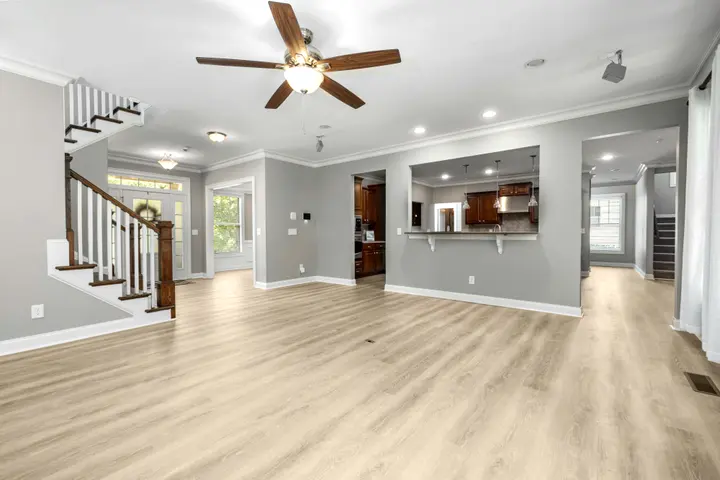
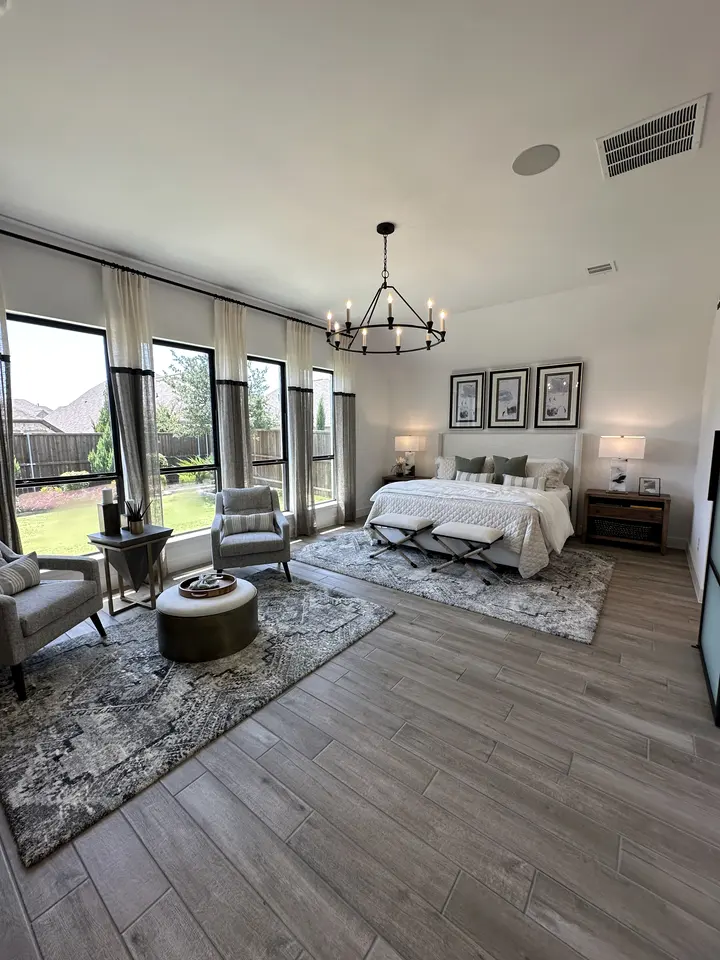
Most bedroom conversions use the same floor as the main living area, carried through so the whole house reads as one. Luxury vinyl plank for bedrooms and living areas is the most common choice because it is warm underfoot, quiet over a good underlayment and easy to clean. Engineered wood and laminate are also good choices in bedrooms, where water is rarely a concern.
Comfort is the usual worry. A hard floor feels cooler and firmer than carpet first thing in the morning. A good underlayment takes the edge off, and a large rug under and around the bed gives you a soft landing where your feet actually touch down. Many people find that combination easier to keep clean than wall-to-wall carpet, because the rug can be lifted, shaken out or replaced on its own.
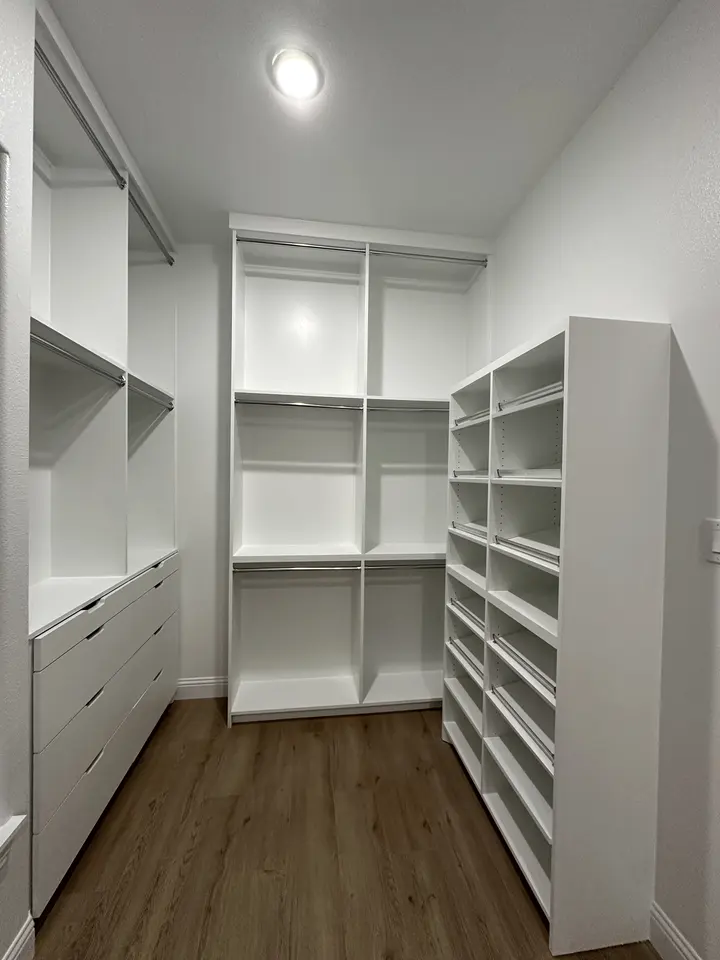
Closets usually get the same floor as the room, which looks finished and means the floor does not stop at a line that may move if the closet is ever redesigned.
Baseboards and trim
Carpet is installed up against the baseboard, and baseboards in carpeted rooms are often set higher off the subfloor to leave room for it. When a thinner hard floor goes in, a gap can show under the baseboard. There are three common fixes:
- Add shoe molding or quarter round along the bottom of the existing baseboard to cover the gap and the expansion space.
- Remove and reset the existing baseboard lower, if it comes off cleanly.
- Replace the baseboard, which is a good moment to go taller or change the profile.
Whichever you choose, the trim needs caulking and paint afterward. If the walls are due too, it is efficient to plan interior painting of walls and trim in the same project, painting after the floor is protected.
Doors and transitions
A hard floor is usually thinner than carpet and pad, so doors generally clear without trimming. The transition at each bedroom door sits under the center of the closed door. If the hallway and bedrooms get the same floor, there may be no transition at all, as long as the total run stays inside the floor's expansion limits.
Will hard floors upstairs make the house louder?
Yes, somewhat, and it is worth planning for. Carpet absorbs the sound of footsteps. A hard floor upstairs transmits more of that impact noise to the rooms below, and the rooms themselves sound more echoey.
A few things help:
- A sound-rated underlayment approved by the flooring maker. Some LVP planks come with an acoustic pad attached.
- A firm, well-fastened subfloor. Screwing down loose panels before installation removes squeaks that hard floors make more noticeable.
- Area rugs in bedrooms and along upstairs hallways, which also add warmth.
- Felt pads on chair and bed legs.
If a child's bedroom sits above your primary suite or a home office, discuss this before choosing the product. Sometimes the right answer is hard floors downstairs and fresh carpet upstairs.
What does it take to change carpeted stairs?
This surprises many homeowners. Under carpet, stair treads and risers are usually rough framing lumber, not finished wood. They are not meant to be sanded and stained, and the edges are often square or rounded in a way that only works with carpet over it.
There are three main approaches:
| Approach | What it involves | Good fit when |
|---|---|---|
| New solid treads and risers | Old treads are removed and replaced with finished hardwood treads, risers painted or clad | You want real wood stairs and the structure allows it |
| Retrofit tread caps | Nosing is trimmed flush and finished caps are fastened over the existing treads | Keeping the structure in place and avoiding major demolition |
| Matching LVP or laminate with stair nose | Each tread is covered with flooring and a matching nosing piece, risers covered or painted | You want the stairs to match an LVP or laminate floor |
Many homeowners paint the risers white or the trim color, which brightens the stair and hides scuffs better than dark wood risers.
Keep the step heights even
Adding material to the treads changes the height of the first and last steps. The steps in between keep their original rise, because each tread moves up by the same amount, but the bottom step becomes taller and the top step becomes shorter unless the landing floors rise too. Building codes commonly limit how much riser heights may vary within one flight, and even small differences cause trips because your feet expect a consistent step. Planning tread thickness with the floor heights at the top and bottom is part of doing stairs properly.
Landings, open sides and railings
Landings are floored like a small room, with a nosing where they meet the next flight down. Open-sided stairs, where the ends of the treads are visible, need returns on each exposed end so the new tread looks finished from the side. Balusters that sit on the treads may have to come out and go back in, or be replaced, which adds carpentry time. If the stair has a painted stringer along the wall, it usually needs touching up once the new treads and risers are in.
Safety on hard stairs
Hard stairs are more slippery than carpet, especially in socks. A matte or textured finish, a firm nosing edge, good lighting and a secure handrail all help. For households with small children, older relatives or dogs, a fixed stair runner down the center keeps the hard-floor look with more grip.
What drives the cost of replacing carpet with hard flooring?
- How much preparation the slab or subfloor needs once the carpet is up.
- The flooring product and underlayment chosen.
- Baseboard work: shoe molding, resetting or replacement, plus paint.
- For stairs, the number of steps, the approach chosen, whether there are open sides or landings, and painting risers and stringers.
Stairs usually take more labor per square foot than any other part of a flooring project, because each step is measured, cut and fitted individually.
What to decide before you call for an estimate
- Which rooms and closets are changing, and whether the hallway and stairs are included.
- Should the stairs match the new floor or stand apart?
- How you feel about noise between floors, and whether rugs are part of the plan.
- Whether baseboards should be kept, reset or replaced.
You can read more about our approach on the flooring installation services page. When you are ready, request a free estimate for your carpet replacement and we will look at the rooms and the stairs in person.
Questions homeowners ask
Is replacing carpet with hard flooring worth it in bedrooms?
For most households, yes. Hard floors do not hold dust, pet hair and spills the way carpet does, they match the main living areas, and a good floor lasts far longer than carpet. The trade-offs are a cooler, firmer feel and more sound, which rugs and the right underlayment largely address.
Can I refinish the wood under my carpeted stairs?
Usually not. Treads under carpet are typically construction-grade lumber, often with knots, gaps and edges shaped only for carpet. Some older homes have finished hardwood treads under the carpet, which can be refinished. Pull up a corner of carpet on one step to see what you have.
Should bedrooms get the same floor as the rest of the house?
It usually looks best and avoids transitions in hallways. Bedrooms behind closed doors can take a different floor without looking disjointed, since the change sits under the door. Using the same floor also simplifies ordering and keeps spare planks interchangeable.
How long does it take to replace carpet in bedrooms and stairs?
Bedrooms often go quickly once the subfloor is prepared, while stairs take longer because every step is fitted by hand. Painting risers and trim adds drying time. Your written estimate should give you a realistic schedule based on the number of rooms and steps.