In short
Wood-look porcelain tile is the harder, longer-lived floor and handles water, heat and sunlight without complaint, but it is cold, hard underfoot and slower to install. Luxury vinyl plank is warmer, quieter, softer on feet and dropped dishes, and faster to put down, but it can be scratched through and does not suit very hot, sunny or unconditioned rooms.
Key takeaways
- Porcelain wood-look tile is close to indestructible in daily use, while LVP trades some toughness for comfort and speed.
- Long plank tile needs a very flat floor and a limited offset, or the edges catch light and feet.
- LVP is warmer, quieter and easier on joints and dropped glasses than tile.
- Sunrooms and rooms with strong direct sun usually favor tile, because vinyl expands with heat.
Both floors are sold as the answer to the same problem. You want the look of wood through a kitchen or family room, but you do not want to worry about water, dogs or the kids dragging in half the backyard. The choice of wood-look tile vs. luxury vinyl plank comes down to how the two feel to live on, not just how they look in a photo.
From a few feet away, both can pass for wood. Up close and underfoot, they are very different floors, and the right one depends on the room, the slab under it and the people standing on it every day.
What are you actually comparing?
Wood-look tile is almost always porcelain, a dense fired clay body with a printed wood grain on the surface. It comes in long, narrow planks, is set in thin-set mortar on the slab or a cement backer, and is grouted like any other tile.
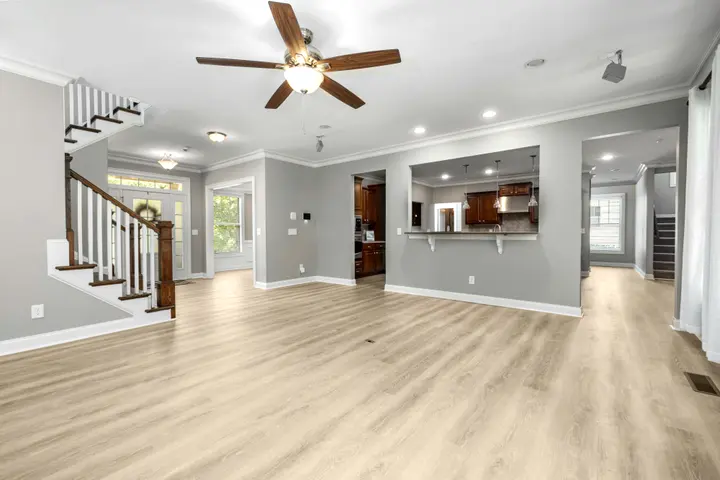
Luxury vinyl plank, or LVP, is a layered plank with a printed wood image under a clear wear layer, over a vinyl or rigid composite core. Most residential LVP clicks together and floats over the subfloor on a thin underlayment. It is cut with a knife or saw and goes down without mortar, grout or curing time.
So one is a ceramic surface bonded to the house, and the other is a floating plastic-based floor that rests on it. Almost every difference follows from that.
Wood-look tile vs. luxury vinyl plank on durability
Porcelain is extremely hard. Dog claws, sand, furniture legs and rolling chairs rarely mark it, and the color runs deep enough that everyday wear does not show. Water on the surface does nothing to it, and properly sealed or cementitious grout joints hold up to regular mopping.
LVP is tough for a resilient floor but softer than porcelain. Its wear layer protects the printed image, and a heavier wear layer lasts longer, but a sharp object dragged across it can cut through. Heavy furniture on narrow feet can leave dents, so felt pads and wide casters are a good habit.
Where tile can lose is cracking. A dropped cast-iron pan can chip a tile, and a crack in the slab below can telegraph up through the tile if it was set without a crack isolation membrane. Replacing a single tile is possible, but matching an older batch and cutting out grout without damaging neighbors takes care.
Cleaning and upkeep
Day to day, both floors clean the same way: sweep or vacuum grit, then damp-mop with a cleaner the manufacturer approves. Harsh solvents, steam mops and wax-based polishes can dull or damage LVP, so check the care sheet before you reach for them.
Tile adds grout to the list. Cement grout is porous and slowly darkens in kitchens and entries unless it is sealed and resealed on the schedule the product calls for. Epoxy and other stain-resistant grouts cost more up front but largely remove that chore. Choosing a mid-tone grout close to the tile color hides everyday dirt far better than a bright white or very dark joint.
LVP has no grout, but its seams are its weak point. Water left standing along a seam can work its way under a floating floor, so wet mopping should be light, and leaks near dishwashers and ice makers should be found quickly.
Which is more comfortable to live on?
This is where most families feel the difference.
- Temperature. Tile on a slab is cool to the touch. In a Texas summer that can feel pleasant. On a winter morning in bare feet it is less welcome. LVP sits at close to room temperature.
- Hardness. Standing at a kitchen counter for an hour is easier on LVP. Dropped glasses and plates tend to survive on vinyl and rarely survive on porcelain.
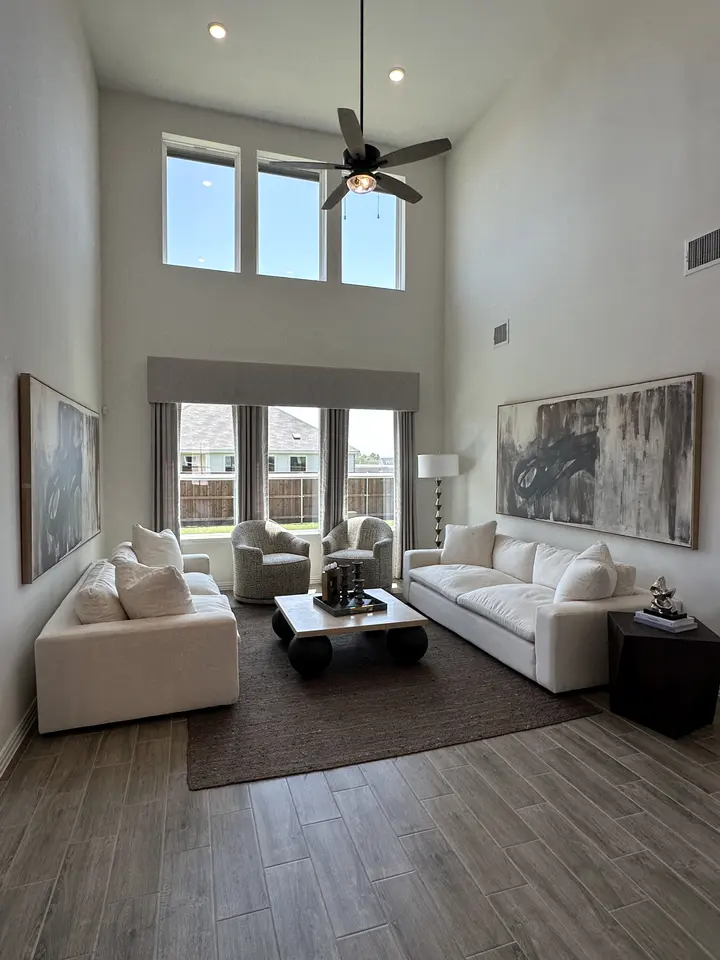
- Sound. Tile makes rooms more echoey, especially open plans with tall ceilings. LVP over a good underlayment is quieter, though a floating floor on an uneven slab can sound hollow.
- Toddlers and older relatives. A fall on tile is harder. Many families with small children or aging parents lean toward LVP in the main living area for that reason alone.
How does each handle heat, sunlight and slab movement?
Vinyl expands and contracts with temperature. In a room with large west-facing windows, a sunroom, or a space that is not air-conditioned all the time, direct sun can heat LVP enough to cause gapping or peaking at the joints. Manufacturers typically limit their products to temperature-controlled spaces, and some call for window coverings in strong sun. Porcelain does not care about heat or sunlight at all, which is why tile is often the better choice for sunrooms and rooms that open straight to a patio.
Slab movement is the other side of the coin. Many North Texas slabs sit on expansive clay soil that swells when wet and shrinks when dry, so small cracks and seasonal movement are common. Tile is rigid and bonded to the slab, so it is more sensitive to that movement. A crack isolation membrane over existing cracks, perimeter gaps, and movement joints in large tiled areas are the standard defenses. A floating LVP floor is not bonded to the slab, so it tolerates small movement better, as long as the slab stays flat.
Installation: flatness, layout, time and cost
Long plank tile is less forgiving than it looks. Planks that are long and narrow often have a slight bow from firing, and if the floor is not very flat or the rows are staggered at the halfway point, one edge sits higher than the next. That raised edge, called lippage, catches the light and your toes. Tile makers commonly recommend an offset of no more than one-third of the plank length for this reason, along with a leveling clip system and careful slab preparation.
Tile also takes longer. Mortar needs to set before grouting, and grout needs to cure before heavy use. LVP can go down and be walked on the same day, once the subfloor is prepared. Both floors still need the slab checked for flatness and moisture before anything is installed, which we explain in how we approach flooring installation.
Quick comparison
| Factor | Wood-look porcelain tile | Luxury vinyl plank |
|---|---|---|
| Scratch and wear resistance | Excellent | Good, depends on wear layer |
| Water on the surface | Unaffected | Unaffected if wiped up |
| Comfort and warmth | Hard and cool | Softer and warmer |
| Direct sun and heat | Unaffected | Can expand and gap |
| Slab cracks and movement | Needs membrane and movement joints | More tolerant when floating |
| Installation time | Longer, with mortar and grout curing | Shorter, walkable right away |
| Future removal | Demolition, dust, slab patching | Planks unclick and lift up |
What drives the cost of each floor?
Rather than quote a per-foot number that ignores your house, here is what moves the price:
- The product grade, plank size and, for tile, whether the edges are rectified for narrow grout joints.
- What comes up first. Removing old glued-down tile is far more work than pulling carpet.
- Slab preparation, including grinding, self-leveling compound and crack isolation.
- Labor time. Tile is set, leveled and grouted piece by piece, and that labor is usually the larger share of a tile floor.
- Baseboards, thresholds, stair nosings and transitions to other floors.
So which one belongs in your house?
Choose wood-look tile when durability and heat resistance matter most: sunrooms, back entries, rooms with pets that are hard on floors, laundry rooms, and bathrooms. Tile is also a strong fit if you plan to stay a long time and want a floor you essentially never replace. Our page on porcelain and wood-look tile floors covers the options in more detail, and tile is also standard in our bathroom remodels.
Choose LVP when comfort, quiet and speed matter most: open kitchens and family rooms where people stand and play, bedrooms, homes with small children, and projects on a tighter schedule. See our page on LVP floors for busy households for what separates a good plank from a thin one.
Some homes use both, with tile in the sunroom, laundry and baths and LVP everywhere else. That works well when the change happens at a doorway rather than across an open room.
What to decide before you call for an estimate
- Which rooms are in scope and whether they need to be one continuous floor.
- How much sun those rooms get and whether they stay air-conditioned.
- What is on the floor today, and any slab cracks you already know about.
- How much comfort and quiet matter compared with long-term toughness.
We will check the slab, talk through both options in your actual rooms, and give you a written estimate for each. Request a free estimate when you are ready.
Questions homeowners ask
Is wood-look tile vs. luxury vinyl plank better for dogs?
For scratches, porcelain tile is the tougher surface and large dog claws will rarely mark it. It is also slippery for some dogs and hard on older pets' joints. LVP scratches more easily but offers more grip and comfort. Many dog owners choose tile for entries and LVP for living areas.
Can wood-look tile go over an existing tile floor?
Sometimes, if the old tile is tightly bonded, flat and free of cracks, and the added height works at doors, appliances and transitions. In many homes it is better to remove the old tile so the slab can be checked, cracks treated and the floor flattened properly for long planks.
Does wood-look tile really look like wood?
Good porcelain planks with varied faces, narrow grout joints and a grout color close to the tile read convincingly as wood from standing height. Short repeats, where the same plank face shows up often, and wide contrasting grout lines are what give tile away.