In short
The best accent wall ideas add texture, not just color: board and batten, diagonal wood panels, picture-frame molding, vertical slats or a stacked-stone fireplace wall. Pick the wall your eye already goes to, like the bed wall, fireplace or TV wall, and keep the finish simple, often one color over the whole panel design, so the pattern does the work.
Key takeaways
- Choose the wall that is already the focal point of the room instead of creating a new one.
- Trim-based accent walls like board and batten or diagonal panels add shadow lines and depth that paint alone cannot.
- Painting panels, trim and wall in one color usually looks more tailored than picking out the trim in a contrast color.
- Stone fireplace walls and floating shelves need backing and blocking planned before anything is installed.
A lot of homes in Dallas-Fort Worth have the same problem: big, flat drywall surfaces in living rooms, bedrooms and bonus rooms that make the space feel unfinished no matter how you furnish it. Painting one wall a different color helps a little, but it often ends up looking like a leftover decision.
The accent wall ideas that hold up over time add something physical to the wall. Trim patterns, panels and stone create shadow lines and texture that change through the day. Below are the options we get asked about most, where each one fits and what goes into building it properly.
Which wall should be the accent wall?
Start with the wall your eye already lands on when you walk in. An accent wall works when it strengthens an existing focal point, and it looks odd when it competes with one.
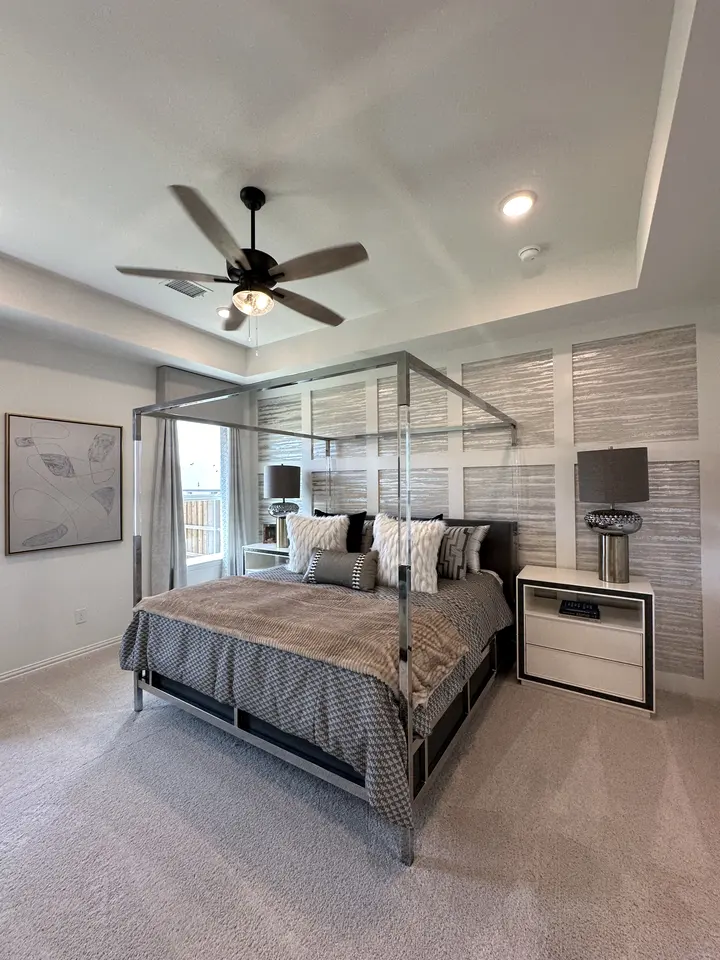
- Bedrooms: the wall behind the headboard is the natural choice.
- Living rooms: the fireplace wall or the TV wall, whichever the seating faces.
- Dining rooms: the wall behind a sideboard or the one opposite the entry.
- Offices: the wall behind you on video calls, which is the one other people actually see.
- Entries and stair halls: a lower wainscot-style treatment along a long run of wall.
Avoid walls broken up by several windows, doors or vents. Every opening interrupts the pattern, and a panel layout that has to dodge four obstacles rarely looks planned.
Accent wall ideas that go beyond paint
These are the treatments that give a wall real depth. Each one can be painted, and most look best when they are.
Board and batten
Vertical battens, sometimes with a horizontal rail, applied over drywall or over a smooth panel backing. It works in farmhouse, traditional and modern rooms depending on spacing and height. A full-height layout reads as more modern; a two-thirds or chair-rail height version feels more traditional.
Spacing changes the character more than most people expect. Wide spacing between battens looks relaxed and suits large walls, while tighter spacing looks crisper and more tailored. The layout should divide the wall evenly, so the end bays at each corner match the rest instead of leaving a narrow sliver.
Diagonal panels
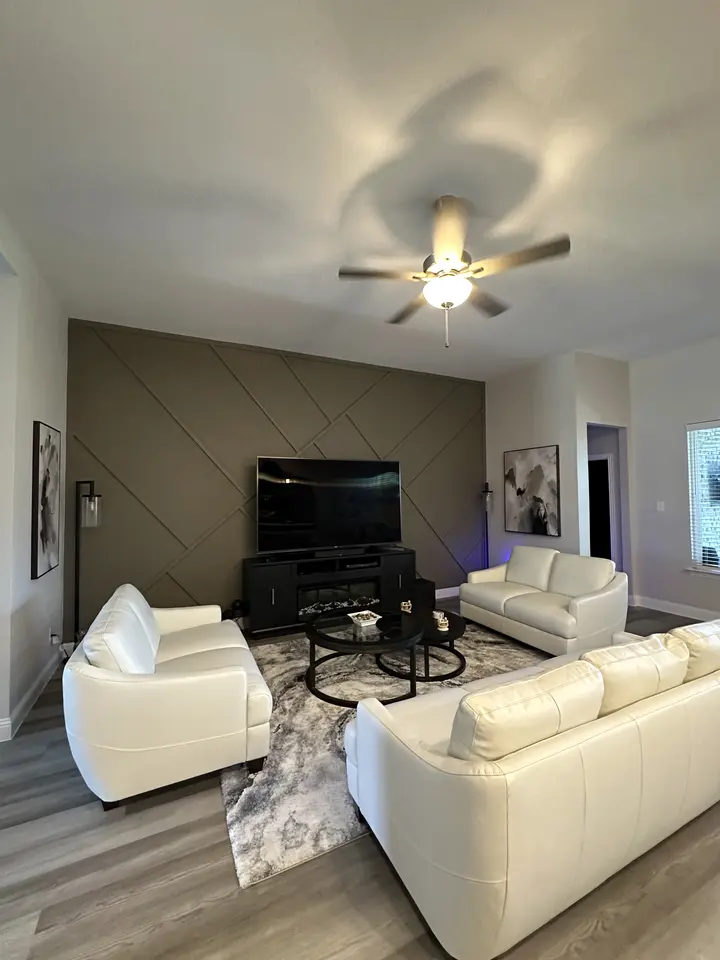
Strips of trim laid out in angled lines or a geometric pattern across the wall. This is one of the accent walls we build most often at Legacy Home Solutions, and we paint the whole design, trim and wall together, in a single color. The pattern shows up as light and shadow rather than as lines of contrast, which keeps it from feeling busy.
Picture-frame molding
Rectangles of thin molding applied to the wall, often in a repeated grid. It suits older homes and more formal rooms, and it is a quiet way to add detail to a dining room or primary bedroom.
Vertical slats
Closely spaced wood slats, often left natural or stained, sometimes with a dark backing behind them. It is a clean, contemporary look for TV walls and offices.
Stacked stone
Natural or manufactured stone veneer, usually around a fireplace. It adds the most texture of any option and changes the whole character of a living room.
| Treatment | Style | Best walls | Finish |
|---|---|---|---|
| Board and batten | Farmhouse to modern | Bedrooms, entries, dining rooms | Painted |
| Diagonal panels | Modern, graphic | Bed walls, TV walls, offices | Painted one color |
| Picture-frame molding | Traditional, formal | Dining rooms, primary bedrooms | Painted |
| Vertical slats | Contemporary | TV walls, offices | Stained or painted |
| Stacked stone | Rustic to modern | Fireplace walls | Natural stone color |
You can see how these come together on our accent walls and decorative panels page.
Why paint a panel wall one single color?
It is tempting to paint the wall one color and the trim another, since that is how most homes treat baseboards and casings. On a panel accent wall, that contrast often backfires. Every strip of trim becomes a bold line, and a diagonal or grid pattern starts to look like a drawing on the wall.
Painting everything the same color does three things:
- The pattern reads through shadow, so it looks different in the morning, the afternoon and under lamps at night.
- Small gaps and slight variations in the trim disappear, because there is no color edge to draw attention to them.
- The wall feels like part of the architecture rather than a decoration added later.
Mid-tone and deep colors show the relief best: sage, clay, greige, charcoal, navy. Very light whites can wash the shadow lines out in a bright room, although a soft white still works well in a room that gets raking side light. For the finish, satin or a scrubbable eggshell is the usual choice, since it holds up to cleaning and gives the edges of the trim a slight sheen that helps the pattern show.
What goes into a stacked-stone fireplace wall with floating shelves?
A stone fireplace wall paired with floating shelves on either side is one of the more involved accent wall ideas, and it is one Legacy Home Solutions builds. It is also where planning order matters most.
Backing and support. Stone veneer is heavy. Depending on the product, it goes over cement board or a lath and mortar scratch coat, not straight onto painted drywall. The installer needs to know what is behind the wall before choosing the method.
Fireplace clearances. Anything around a firebox must follow the fireplace manufacturer's clearance requirements for combustible materials. That affects where wood shelves, mantels and trim can go.
Shelf blocking. Floating shelves only look floating because their support is hidden in the wall. That means solid blocking or brackets anchored to framing, installed before the drywall or stone is finished. Adding them afterward usually means opening the wall again.
Wiring. If a TV, sconces or shelf lighting are planned, the boxes and wire runs go in before the stone and finish work.
Built-in shelving and cabinetry around a fireplace overlaps with our custom closets and built-ins work, so it can be planned as a single project.
Can a paint-only accent wall still look good?
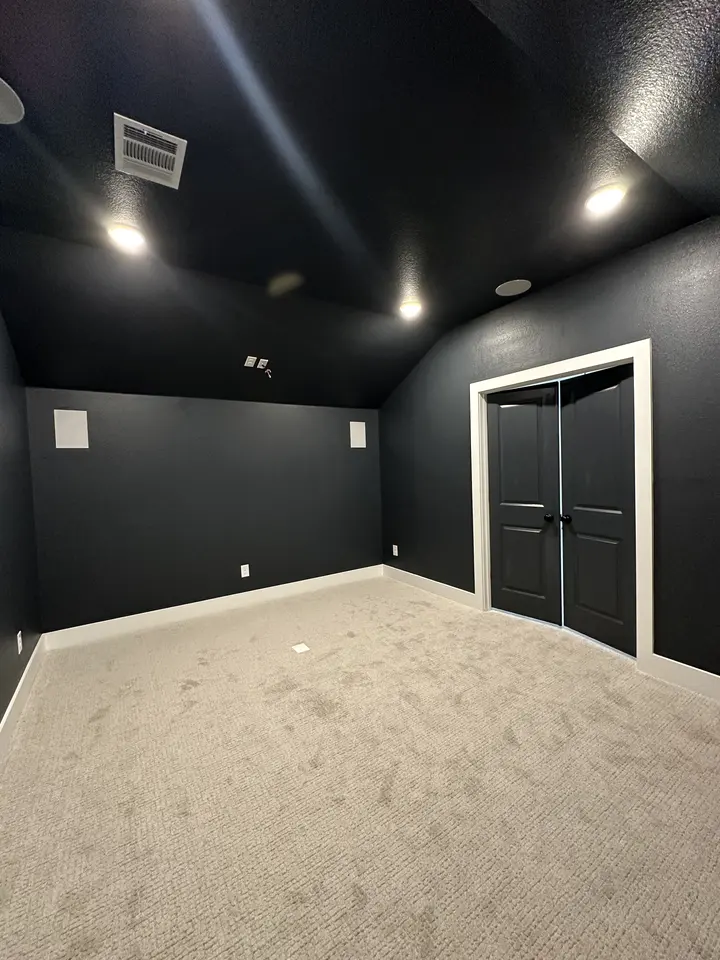
Yes, when it is done with intent. A painted accent wall works best in a room where the rest of the palette is quiet and the accent color relates to something else in the room, like a rug, artwork or upholstery.
- Pick a color with the same undertone as the other walls, just deeper, rather than a completely unrelated color.
- Paint to natural edges. Stop the color at an inside corner, not in the middle of a wall.
- Consider color drenching the whole room instead. If you love a deep color, it often looks more deliberate on every wall than on one.
- Try a painted shape. An arch behind a bed or a color block behind a desk can act as an accent without committing the full wall.
Paint-only accents are also the easiest to change. If you are not sure about a color, a single painted wall is a low-risk way to live with it for a while before committing to panels or trim in the same shade.
For advice on full-room color, prep and finishes, our painting services overview covers interior and exterior work.
How is a trim accent wall built?
A clean panel wall is mostly layout and finishing. The actual trim goes up quickly; the hours go into getting it straight and making the joints invisible.
- Layout. The pattern is drawn to the actual wall dimensions so spacing is even and the design lands cleanly at corners, ceiling and baseboard.
- Surface prep. Outlets may need box extenders, baseboards may be removed or scribed, and the wall is patched where needed.
- Install. Trim, typically primed MDF or poplar, is fastened into framing where possible with adhesive and finish nails.
- Fill and caulk. Nail holes are filled and sanded, and every seam between trim and wall is caulked so the paint reads as one surface.
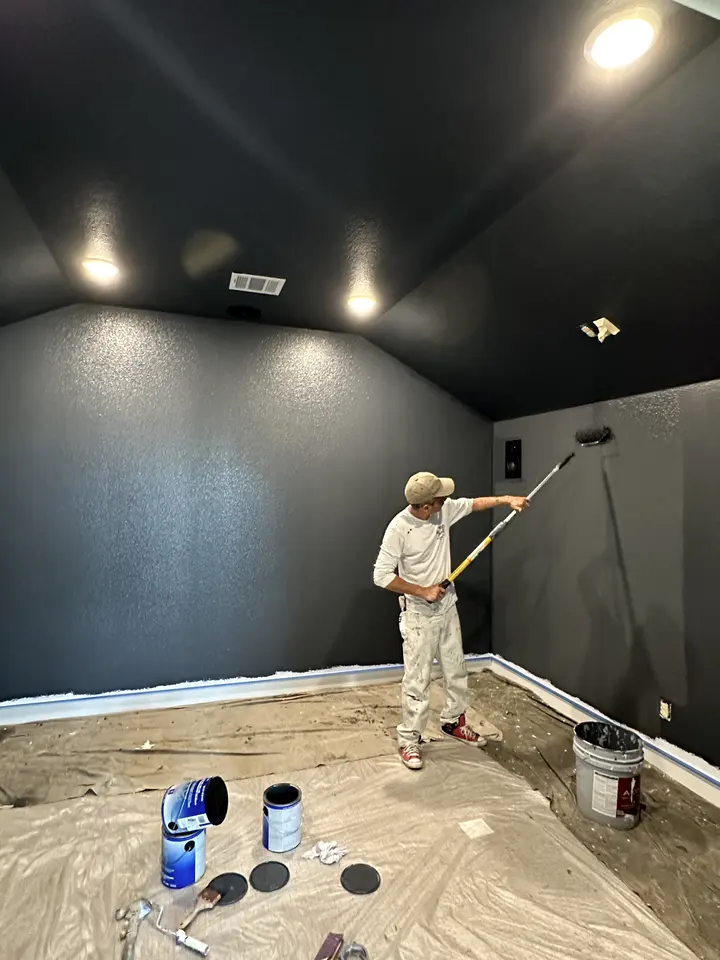
- Prime and paint. Raw edges are primed, then the whole wall gets full finish coats, brushed in the corners and rolled on the flats.
The caulk and fill step is what separates a professional panel wall from one that looks homemade. Skipped caulk lines show as dark gaps, and they get worse as the house moves through Texas seasons.
What to decide before calling for an estimate
Have a rough answer to these, and a photo of the wall if you can:
- Which wall, and whether it has outlets, switches, vents or a TV mount.
- The style you lean toward, with a saved picture or two.
- Full height, or partial height with a cap rail.
- Paint color direction, even if it is just light, mid-tone or deep.
- For fireplace walls, whether you want shelves, a mantel, lighting or a TV.
From there, schedule a free estimate for your accent wall and we will measure, sketch the layout on your actual wall and give you a written price.
Questions homeowners ask
What are the easiest accent wall ideas for a bedroom?
The simplest bedroom accent walls are a painted wall behind the headboard, a painted arch or color block, or a board and batten or picture-frame molding design painted in one color. Trim treatments take more work than paint alone but add depth that holds up better over time, especially behind a bed where the wall is always in view.
Does an accent wall add value to a house?
An accent wall is mostly about how the room feels to live in. A well-built trim or stone feature can make a room photograph and show better, but a bold personal color may get repainted by the next owner. Neutral or mid-tone colors on a well-finished panel wall have the broadest appeal.
Can board and batten go over textured drywall?
Yes. Battens can go directly over textured walls, and some homeowners like the contrast. For a crisper look, a smooth panel or thin backing sheet is installed first, or the texture between battens is skimmed flat. That extra step adds time, so it should be decided before the estimate.