In short
For most homes, interior paint sheens break down simply: flat on ceilings, matte or eggshell on living room and bedroom walls, satin in kitchens, bathrooms and busy hallways, and semi-gloss on trim, doors and cabinets. Higher sheen cleans more easily but shows every wall flaw, so the right choice balances durability against how smooth your walls really are.
Key takeaways
- Sheen controls three things at once: how much light the wall reflects, how easily it cleans and how much it reveals about the wall underneath.
- Eggshell or a washable matte suits most living spaces, while satin handles moisture and heavy traffic better.
- Trim, doors and cabinets need a harder, higher-sheen finish than walls because they get handled daily.
- Sheen names are not standardized, so compare actual samples before choosing.
You picked the color, and then the paint store asks which finish you want. Flat, matte, eggshell, satin, semi-gloss, gloss. The chips look almost identical on the card, and it is hard to tell what difference the choice will make once the paint is on your walls.
It makes a big difference. Interior paint sheens change how a color looks, how well a wall stands up to kids, dogs and cleaning, and how much every patch, nail pop and roller mark shows. Here is how each sheen behaves and where we typically use it in Dallas-Fort Worth homes.
What does paint sheen actually change?
Sheen is a measure of how much light the dried paint reflects. A flat finish scatters light in every direction. A gloss finish reflects it back like a mirror. Everything else sits somewhere in between, and three practical things follow from where a paint lands on that scale.
- Appearance. Lower sheens look softer and make colors appear slightly deeper and more even. Higher sheens look crisper and brighter, and they catch highlights.
- Durability and cleaning. Higher sheens form a harder, smoother film that resists scuffs and stands up to wiping. Lower sheens are more porous and can mark or burnish when scrubbed.
- Hiding flaws. Lower sheens hide dents, patches, drywall seams and texture changes. Higher sheens highlight them, especially where light comes across the wall from a window.
The whole decision comes down to trading one of those against the others for each surface in the room.
Interior paint sheens compared
| Sheen | Look | Cleanability | Hides flaws | Typical use |
|---|---|---|---|---|
| Flat | No shine, very soft | Low | Best | Ceilings, low-traffic walls |
| Matte | Nearly flat, slightly richer | Low to moderate, higher in washable lines | Very good | Living rooms, bedrooms, dining rooms |
| Eggshell | Low, soft glow | Moderate | Good | Most walls, hallways, family rooms |
| Satin | Noticeable soft sheen | Good | Fair | Kitchens, bathrooms, kids' rooms, mudrooms |
| Semi-gloss | Clearly shiny | Very good | Poor | Trim, doors, cabinets, bathroom walls |
| Gloss | Glass-like | Excellent | Poorest | Accent furniture, select doors and trim |
Which sheen should you use in each room?
Ceilings
Flat, almost always. Ceilings are not touched, and a flat finish hides the joints, patches and slight waves that show up when light from windows and fixtures hits the ceiling at a low angle.
Living rooms, dining rooms and bedrooms
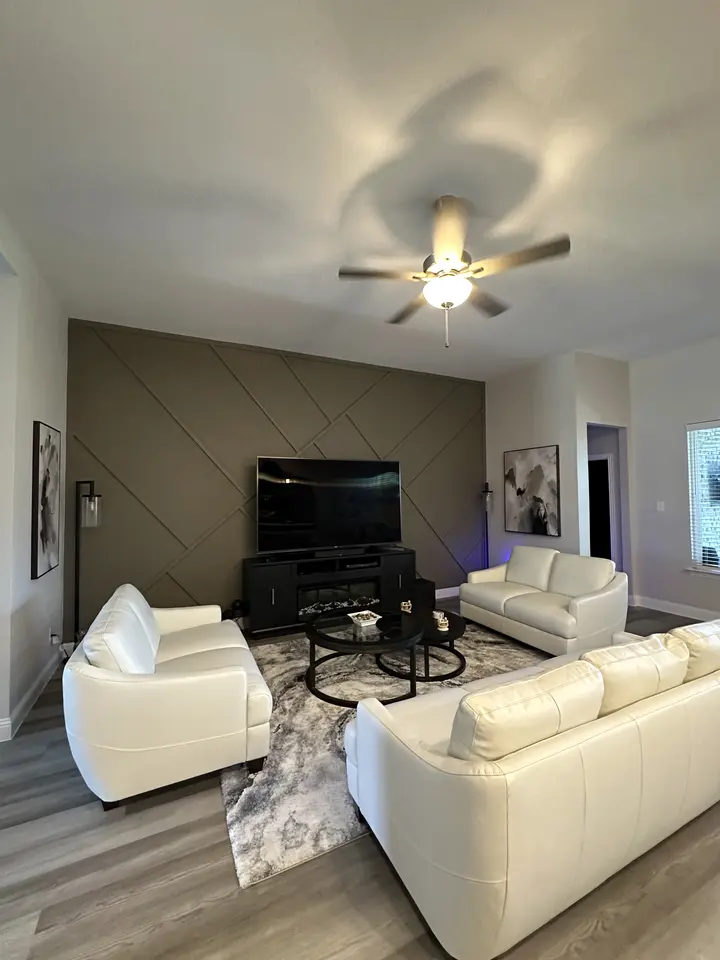
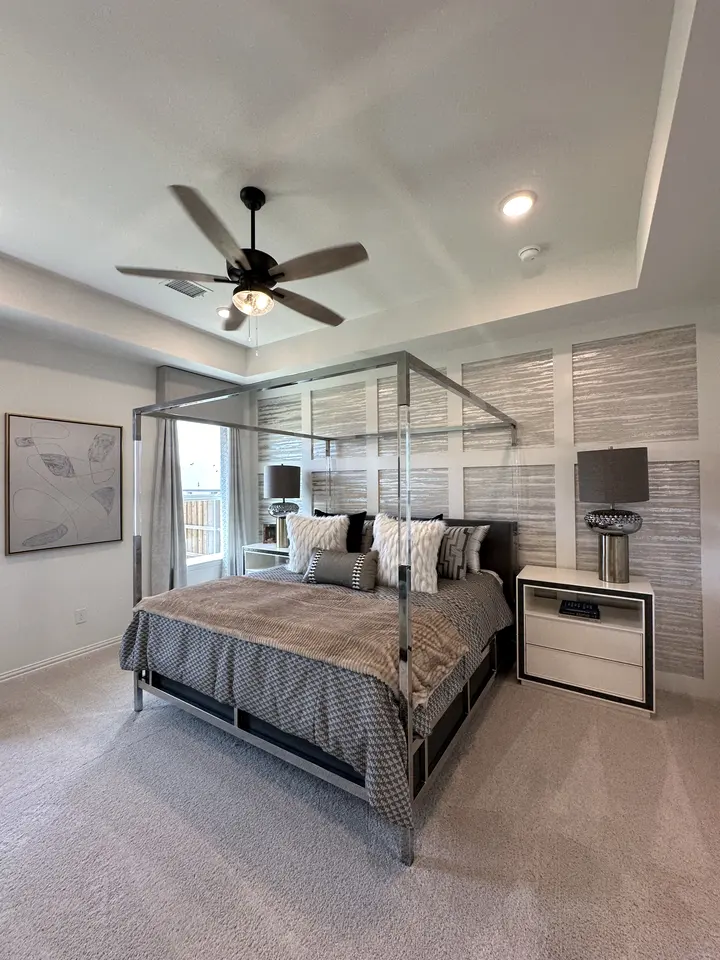
Matte or eggshell. Eggshell has been the default for years because it cleans up reasonably well while still looking soft. Many washable matte products now offer similar cleanability with less shine, and they are a good choice for older homes with plaster or walls that have been patched many times.
Hallways, stairwells and family rooms
Eggshell, or satin in homes with young kids and pets. These walls get brushed by bags, hands and furniture all day. The extra toughness of satin can be worth the slight shine.
Kitchens and bathrooms
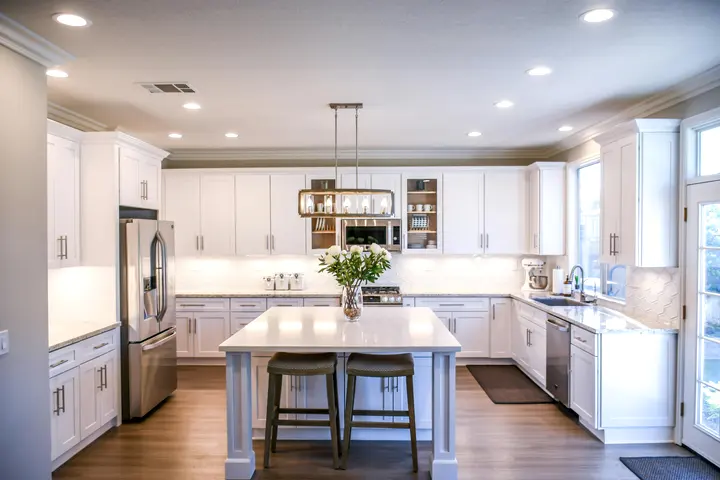
Satin is the usual choice, and some bathrooms go to semi-gloss. These rooms deal with steam, splashes and grease, and a tighter paint film sheds moisture and wipes clean. Paints made for bathrooms often include mildew-resistant additives. Even the right paint will struggle without an exhaust fan that actually runs during and after showers, which is worth checking during any bathroom remodeling project.
Trim, doors and cabinets
Semi-gloss is the standard, with satin as a softer option for a more modern look. Baseboards take vacuum hits and shoe scuffs; doors and cabinets get handled every day. A harder, higher-sheen enamel stands up to that and cleans easily. Trim finishes are also chosen for contrast: slightly shinier trim against softer walls gives the edges of a room a clean definition.
Cabinets deserve a note of their own. They take more abuse than any wall, and ordinary wall paint in any sheen will chip and stick to itself where doors meet the frame. Cabinet work calls for an enamel made for that job, careful degreasing and sanding, and a primer that bonds to the existing finish. If you are also weighing new doors or boxes, our kitchen cabinet and countertop options are worth a look before deciding to paint.
Laundry rooms, mudrooms and kids' rooms
Satin. These are the rooms where walls get handprints, wet coats, sports bags and crayons. A finish that can be wiped down several times without going shiny or dull in patches is worth more here than the softest possible look.
Textured walls in any room
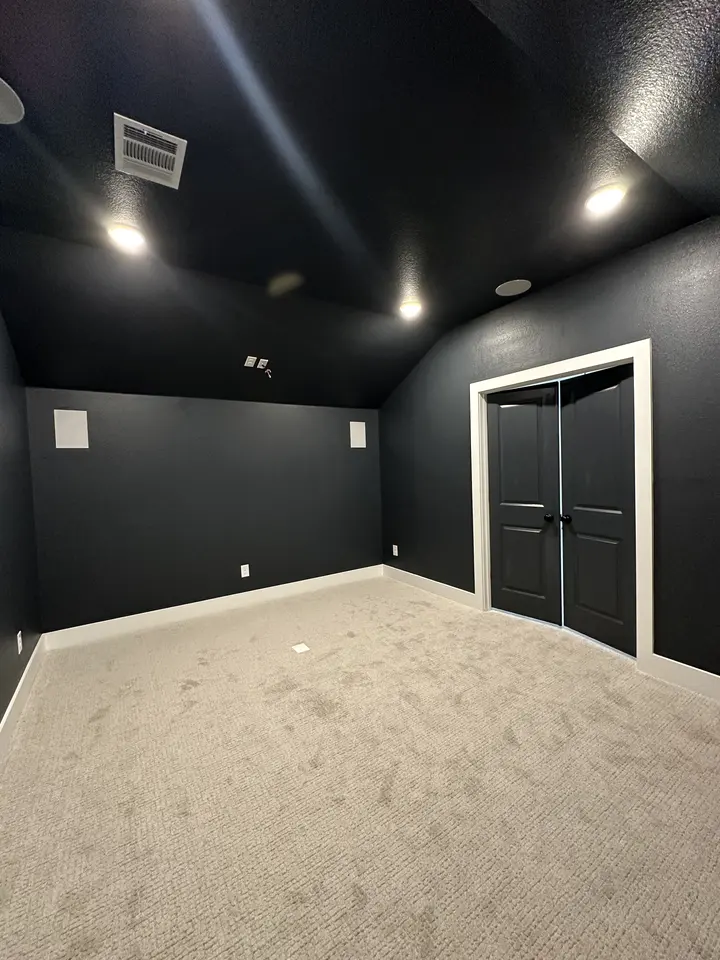
Many homes across Dallas-Fort Worth have orange peel or knockdown texture on the walls. Texture interacts with sheen in a way people do not always expect. A higher sheen puts a highlight on every bump of the texture, which makes the wall look busier and can exaggerate the difference between original texture and a patched area that was re-textured by hand.
On textured walls, eggshell or matte usually looks best. If a room needs the durability of satin, a careful texture match on any patches becomes more important, because the shine will reveal where the old and new texture meet. Smooth walls, on the other hand, can take a higher sheen, but only if they are truly flat. A smooth wall with seams showing will look worse in satin than a textured one.
Lighting plays into this too. Walls washed by light from a large window or a row of recessed cans at a low angle show everything. In those spots, dropping one step in sheen is often the simplest fix.
Why do sheen names vary between paint lines?
There is no universal standard for what counts as eggshell or satin. One product line's eggshell can be close to another's satin, and some lines skip a sheen entirely or add their own in-between name like low-lustre or pearl.
That matters in two situations. First, if you are matching an existing wall for touch-ups, you need the same product line, not just the same sheen name. Second, if you are choosing between two options, look at real painted samples in your own light, not a printed chart. A sample board painted with two coats and viewed next to a window will tell you more than any description.
Can you mix sheens in the same room?
Yes, and nearly every well-painted room does. A typical combination is flat ceiling, eggshell or matte walls and semi-gloss trim. The shifts in sheen help each surface do its job and give the room a finished look.
Where mixing causes problems is within a single surface. If a wall gets touched up with a different sheen, or even the same sheen from a different batch, the patch often shows as a dull or shiny spot. This is called flashing, and it is most visible on higher sheens and deep colors. The fix is usually to repaint the wall from corner to corner rather than spot-patching.
A few habits keep touch-ups invisible:
- Keep leftover paint from the job, sealed and labeled with the room and surface.
- Touch up with the same applicator type used originally, a roller for walls and a brush for trim.
- Feather the edges thin rather than dabbing a thick spot.
- If a patch still shows, repaint to the nearest corners or breaks.
Does sheen change how much prep a wall needs?
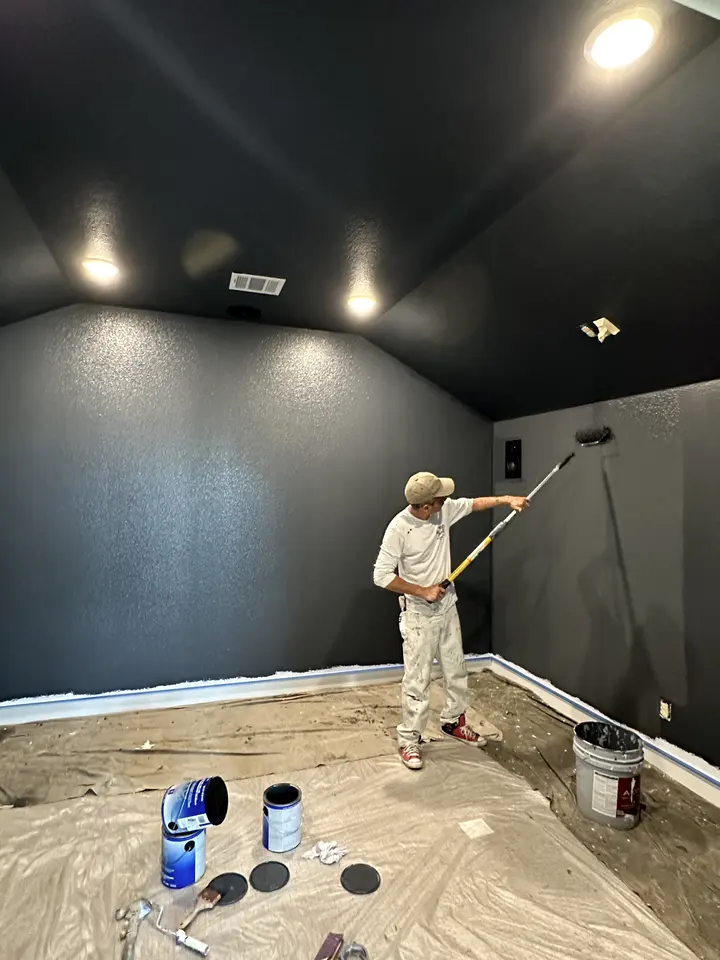
It does. The higher the sheen you choose, the more carefully the surface has to be prepared, because shine makes defects visible. A satin wall over a sloppy patch will show that patch from across the room. A matte wall over the same patch may hide it completely.
Changing sheens also matters. Painting over an existing glossy surface, like old semi-gloss trim or kitchen walls, needs scuff-sanding and cleaning so the new coat grips. Many older homes have oil-based trim under later layers. Water-based paint applied directly over oil can peel, so the trim is tested and, if needed, primed with a bonding primer first. Our page on professional interior painting walks through the prep we do before any finish coat.
Recoat times printed on the can also vary by sheen and product. Higher-sheen enamels often need longer between coats and longer before they fully harden, so doors and cabinets may need gentle handling for a while after painting.
What to decide before calling for an estimate
A painter will help you choose, but the quote is more accurate if you have thought through:
- Which rooms and surfaces are included: walls, ceilings, trim, doors, cabinets.
- Whether you want to keep the sheens you have now or change them, especially on trim.
- How hard each room is used, including kids, pets and cooking.
- Any walls with visible patches, cracks or texture differences that a lower sheen might hide.
Our painting services for Dallas-Fort Worth homes page covers interior and exterior work. When you are ready, book a free painting estimate and we will recommend a sheen for each surface and put it in writing.
Questions homeowners ask
Which interior paint sheens are easiest to keep clean?
Satin and semi-gloss are the easiest to wipe down, followed by eggshell. Many washable matte products clean far better than older flat paints, which makes them a reasonable choice for living areas too. For kitchens, bathrooms, kids' rooms and trim, a satin or semi-gloss finish is still the safest bet for repeated cleaning.
Is eggshell or satin better for bedrooms?
Eggshell or matte is the usual choice for bedrooms, since they look soft and hide wall flaws while still cleaning reasonably well. Satin works in kids' rooms where walls get marked often, but its extra sheen shows more roller marks and patches. For a primary bedroom, the lower sheen generally looks calmer.
Does a higher sheen make a color look different?
Yes. The same color usually looks slightly lighter and brighter in a higher sheen because more light reflects off the surface, and slightly deeper and richer in a flat or matte finish. That is why a color sample should be painted in the sheen you plan to use before you commit.