In short
Painting a room dark works best when you commit to it: carry the color across walls, and often the ceiling, doors and trim, choose a low sheen, and plan warm, layered lighting. Deep colors reward careful prep and extra coats. Half-measures, like one dark wall next to bright white trim, are what usually make a dark room feel smaller.
Key takeaways
- A dark room feels intentional when the color wraps the space instead of stopping abruptly at bright white trim.
- Flat or matte finishes suit deep colors on walls and ceilings, while a slightly higher sheen on doors and trim adds durability.
- Lighting decides whether a deep color reads as rich or muddy, so plan lamps and dimmers alongside the paint.
- Dark colors need a tinted primer, full coats and careful cutting-in, because every flaw shows.
You have a room that feels flat, maybe a den, a media room or a small office, and you keep coming back to a deep navy, charcoal, forest green or oxblood swatch. The worry is always the same: will it feel like a cave, and will you regret it the first time you sit in there on a cloudy afternoon?
Painting a room dark is less of a gamble than it looks. The rooms that disappoint are usually the ones where the dark color was treated as a single wall decision instead of a whole-room plan. The ceiling, the sheen, the lighting and the trim all change how a deep color reads, and deciding them together is what makes the result feel finished.
Does a dark color make a room look smaller?
Not necessarily. A dark color blurs the corners and edges of a room, so your eye has a harder time measuring where the walls stop. In small spaces like powder rooms, studies and media rooms, that softness can actually make the room feel cozier and less boxed in, not smaller.
What shrinks a room is contrast. When a dark wall meets a bright white ceiling and bright white baseboards, every edge is outlined, and the room reads as a small box drawn with a marker. Keep the contrast lower and the room feels calm and enclosed in a good way.
The rooms that suit a deep color best are the ones you use at night or for a single purpose: a den, a media room, a dining room, a primary bedroom, a home office. Busy family rooms that need to feel bright during the day are harder, though not impossible if the natural light is generous.
Should the ceiling go dark too?
This is the biggest decision, and there is no single right answer. It depends on ceiling height, how much daylight the room gets and what the room is for.
- Same color as the walls. Wrapping the ceiling in the wall color is the boldest version, and the most cohesive. It works especially well in media rooms and bedrooms, where you want the room to recede when the lights go down.
- A shade or two lighter. Mixing the wall color at a lighter strength keeps the ceiling in the same family without closing in a standard-height room.
- A warm off-white. A softer white with a little warmth avoids the stark outline that pure white creates against a deep wall.
- Bright white. This is the safest choice on paper and often the least satisfying in practice, because of the high contrast line it draws around the top of the room.
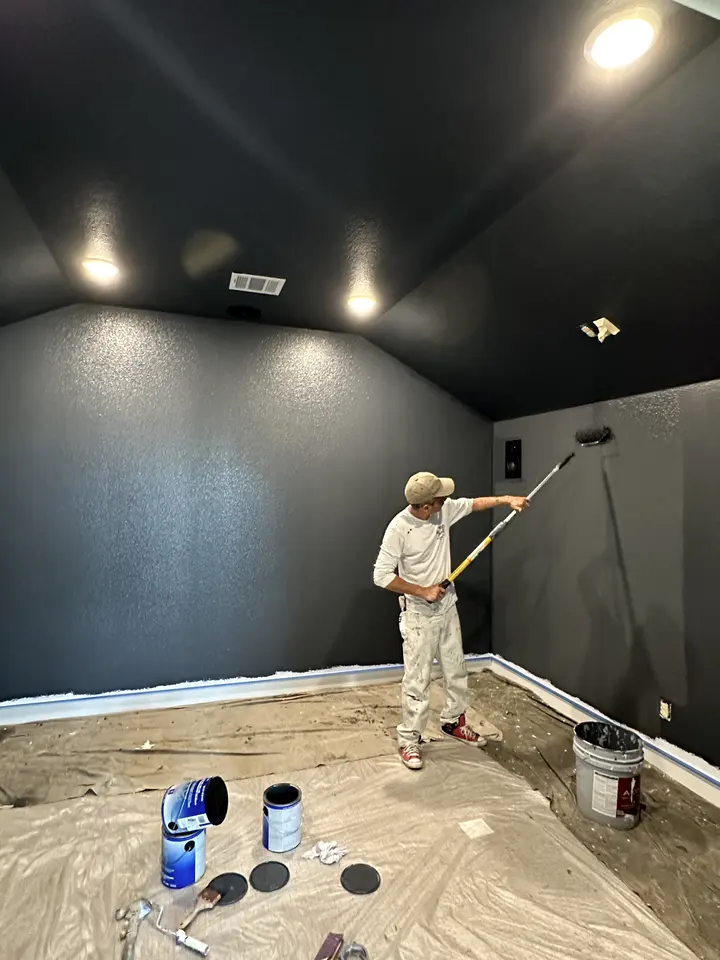
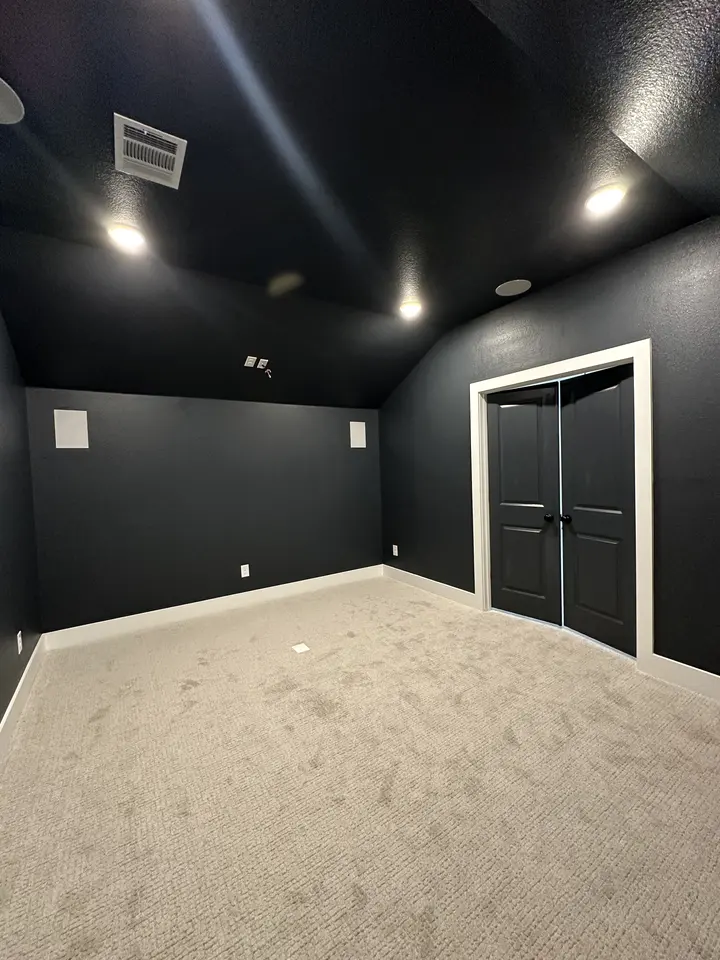
We finished a deep navy media room for a Legacy Home Solutions client with the ceiling and the doors painted dark as well. With every surface in the same deep tone, the screen became the focal point and the walls simply disappeared when the lights dimmed. That is the effect a dark ceiling is best at.
| Ceiling approach | Best for | What to watch |
|---|---|---|
| Same deep color | Media rooms, bedrooms, dens | Needs good lamp and fixture lighting |
| Lighter mix of the wall color | Standard-height living spaces | Test both strengths on large samples |
| Warm off-white | Rooms with limited daylight | Pick an undertone that suits the wall color |
| Bright white | Tall ceilings, bright rooms | Hard contrast line at the crown |
Which sheen works best for painting a room dark?
Sheen matters more with deep colors than with light ones. The more reflective the finish, the more it shows roller marks, patched drywall, lap lines and uneven cutting-in. On a dark wall, a glossy finish can also look streaky when light hits it from the side.
Walls and ceilings
A flat or matte finish gives deep colors that velvety, rich look and hides small wall imperfections. The trade-off is durability. Traditional flat paint scuffs and burnishes, and a dark flat wall shows a shiny spot where it has been rubbed or scrubbed. Many product lines now offer washable matte finishes that hold up much better, and that is usually the right choice for walls in a room people actually use.
Doors, trim and built-ins
These take far more handling, so a satin or semi-gloss finish is the usual choice. Painting trim in the same color as the walls but in a higher sheen is a quiet way to add detail: the color stays continuous, and the change in reflection picks out the profiles of the baseboard and casing.
For a deeper look at how each finish behaves, our guide to interior painting finishes and process covers where each sheen belongs.
How does lighting change a deep color?
A dark color absorbs most of the light that hits it. That is what makes it feel enveloping, and it is also why a deep color that looked perfect on a chip can look muddy or almost black on the wall.
Before you commit, paint large samples, at least two feet square, on more than one wall. Look at them in the morning, late afternoon and at night with your lamps on. North-facing rooms push colors cooler and grayer. West-facing rooms glow warm in the late afternoon. Many deep blues shift toward purple or gray depending on the light, and many deep greens go nearly black at night.
Plan the lighting as part of the job:
- Use several light sources at different heights, like lamps, sconces and a ceiling fixture, rather than relying on one overhead light.
- Choose warm white bulbs, commonly labeled 2700K to 3000K, which make most deep colors look richer.
- Put the main fixtures on dimmers so the room can be bright for cleaning and soft for evenings.
- Add light where the room is used, over a reading chair, a desk or a bar area, so you are not trying to light a dark room from the middle of the ceiling.
Trim, doors and contrast: match or frame?
You have three basic options for the trim in a dark room, and each gives a different character.
Match the walls. Painting baseboards, casings, crown and doors in the wall color is the most modern and the most calming. It works well in rooms with plain, builder-grade trim, because the trim stops competing with everything else.
Go darker or lighter by a step. A tone-on-tone approach, with trim a little deeper or lighter than the walls, adds definition without the hard outline of white.
Frame with white. Crisp white trim against a deep color is the traditional look, and it suits older homes with detailed millwork. It is also the approach that most emphasizes the size of the room, so it works better in larger spaces.
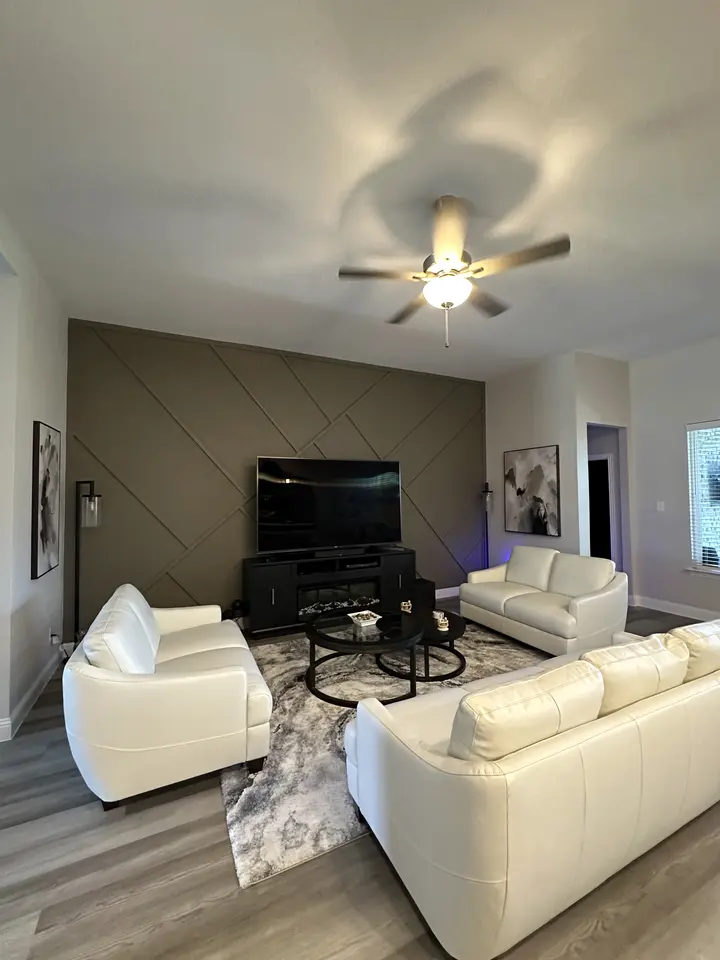
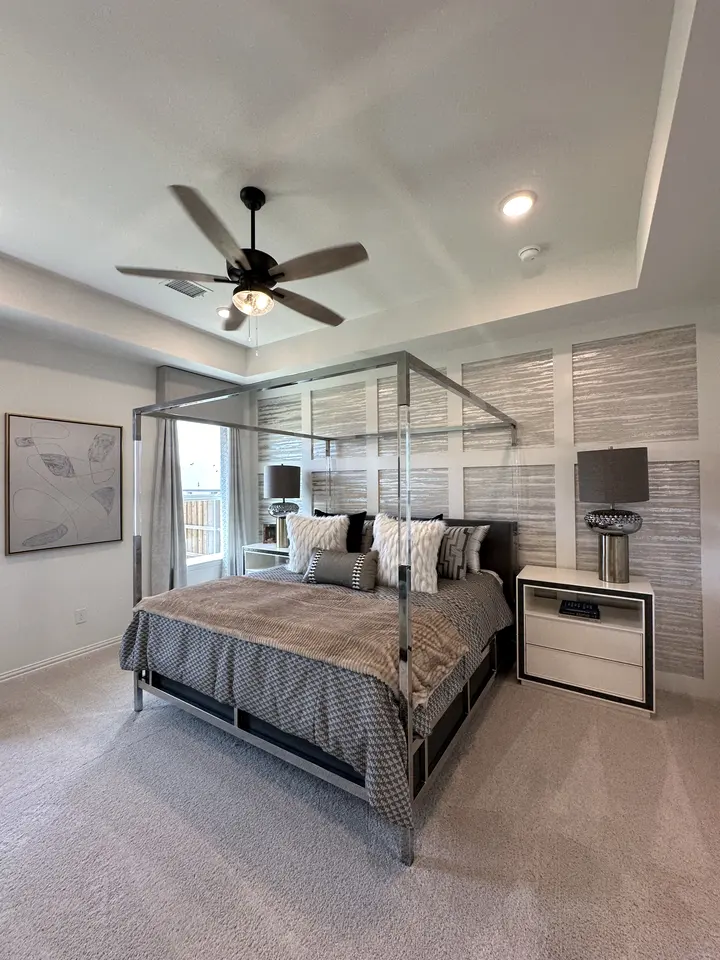
If you are thinking about one dark wall rather than the whole room, read through our page on accent walls and decorative wall panels. A single deep wall can work well, especially behind a bed or around a fireplace, but it is a different design decision from a fully dark room.
Why are dark colors less forgiving to apply?
Deep colors are made from a clear or low-pigment base with a lot of colorant added. That chemistry affects how they go on.
- Tinted primer. Going from a light wall to a dark one usually calls for a gray or tinted primer. It helps the color reach full depth in fewer coats and reduces the patchy look new drywall patches can cause.
- More coats. Plan on at least two full finish coats, and sometimes a third on reds and some blues, which are known for thin coverage.
- Wall prep. Nail pops, patched holes and seams that disappear under a light color show clearly under a deep one. Sanding and spot-priming matter more here.
- Clean cut lines. Where a dark wall meets a lighter ceiling, any wobble in the cut line is obvious from across the room.
- Keeping a wet edge. Rolling in consistent sections, wall by wall, avoids lap marks that show as stripes in raking light.
- Touch-up paint. Save a labeled container of the exact mix. Deep colors are hard to match later if the batch changes.
Follow the recoat time printed on the can between coats. Rushing a second coat over a deep color that is not ready is a common cause of dragging and uneven sheen.
What to decide before calling for an estimate
You do not need a final color to get a useful estimate, but a few decisions will make the quote accurate and the job faster:
- Which surfaces get the dark color: walls only, or ceiling, trim, doors and built-ins as well.
- Your preferred sheen for walls and for trim.
- Whether drywall repairs, nail pops or old patches need attention first.
- Whether lighting changes are planned, since fixtures are easier to swap before the final coat.
You can read more about how we approach color work on our interior and exterior painting services page. When you are ready, request a free written estimate and we will walk the room with you, look at your samples in your own light and put the whole plan in writing.
Questions homeowners ask
Is painting a room dark a good idea for a small room?
Often, yes. Small rooms like powder rooms, offices and media rooms suit deep colors because the color blurs the corners and makes the space feel cozy rather than cramped. The key is to keep contrast low, so consider painting the trim and even the ceiling in the same or a similar tone instead of outlining everything in bright white.
Can you paint a light color over a dark wall later?
Yes. Going back to a light color usually takes a good primer coat first, followed by two finish coats. A stain-blocking or high-hide primer keeps the deep color from ghosting through. It is more work than a same-shade repaint, but it is routine and does not damage the wall.
Do dark paint colors fade faster?
Deep colors can fade on walls that get strong direct sun for long hours, since some colorants are more sensitive to sunlight than others. In most interior rooms, fading is slow. If a wall takes a lot of afternoon sun, ask about higher-quality paint lines and keep touch-up paint from the same batch.